
Top 5 Best Solar Battery Backup Systems for US Homes (2026 Review)

Are you tired of rising electricity rates and frequent grid outages? In 2026, a solar battery is no longer a luxury—it’s a necessity for energy independence. With the recent changes in federal tax credits for homeowner-owned systems, choosing the right battery and financing model is more critical than ever.
In this guide, we review the best solar batteries for 2026 to help you save money and keep your lights on.
1. Tesla Powerwall 3: Best Overall
The Tesla Powerwall 3 remains the king of the market. It now uses safer Lithium Iron Phosphate (LFP) chemistry and offers a massive 11.5 kW continuous power output.
- Capacity: 13.5 kWh
- Best For: Whole-home backup and starting heavy appliances like 5-ton AC units.
- Pros: Compact design, excellent app integration, and high peak power (30 kW).
2. FranklinWH aPower 2: Highest Capacity
If you have a large home with high energy demands, the FranklinWH aPower 2 is a powerhouse.
- Capacity: 15 kWh
- Key Feature: It offers 10 kW of continuous output and can be easily scaled by adding more units.
- Pros: 15-year warranty and a very robust management system (aGate).
3. Enphase IQ Battery 5P: Best for Budget & Savings
Not everyone needs to power their whole house during a blackout. If your goal is to avoid high "Time-of-Use" rates from your utility company, the Enphase IQ 5P is the best choice.
- Capacity: 5 kWh (Modular)
- Best For: Homeowners who want to start small and add more capacity later.
- Pros: Industry-leading 15-year warranty and fast response times.
4. MidNite Solar Powerflo 16: Best Value
For those looking for the lowest cost per kWh, the Powerflo 16 offers an incredible 16 kWh capacity at a price point that beats most mainstream brands.
5. EcoFlow Delta Pro Ultra: Best Plug-and-Play
If you want a system that blurs the line between a home backup and a portable power station, this is it. It’s incredibly easy to install and can scale up to a massive 90 kWh.
Important: Solar Incentives in 2026
Many homeowners are surprised to find that the 30% Residential Clean Energy Credit (Section 25D) expired at the end of 2025.
- Leasing/PPA: If you lease your system in 2026, you can still benefit from the tax credit through the provider.
- State Rebates: Check for local programs like California’s SGIP or New York’s state tax credits, which can still save you thousands of dollars.
Conclusion: Which one should you buy?
- Choose Tesla Powerwall 3 if you want the best tech and high power.
- Choose Enphase if you already have Enphase microinverters.
- Choose FranklinWH if you need maximum reliability for a large family home.
The Homeowner’s Guide to Level 2 EV Charging Installation (2026 Standards)
As electric vehicles (EVs) become the standard in 2026, home charging is no longer just about plugging into a wall. With the adoption of the 2026 National Electrical Code (NEC), safety and technical compliance have become the top priorities for US homeowners.
If you are planning to install a Level 2 charger this year, here is everything you need to know about the technical requirements and costs.
1. 40-Amp vs. 50-Amp: Which One Do You Need?
Most modern EVs, like the Tesla Model 3 or Ford F-150 Lightning, benefit from faster charging.
- 40-Amp Charger: Requires a 50-Amp circuit breaker. It can add about 30 miles of range per hour.
- GFCI Protection: The new code requires stricter Ground Fault Circuit Interrupter (GFCI) protection for all EV circuits to prevent electric shocks in wet conditions (like outdoor driveways).
- Load Management: If your electrical panel is full, you can now use "Smart Load Management" devices to share power between your AC and your EV charger without upgrading your entire panel.
3. Top EV Chargers for US Homes in 2026
- ChargePoint Home Flex: Our top pick for flexibility. It can be adjusted from 16 to 50 amps.
- Tesla Wall Connector (NACS): Now the standard for most US cars. It offers up to 44 miles of range per hour.
- Emporia EV Charger: The best value for those who want to integrate with solar panels.
4. Vehicle-to-Home (V2H): The Future is Here
In 2026, your car isn't just a vehicle; it’s a backup battery. With V2H technology, cars like the Tesla Cybertruck or Kia EV9 can actually power your entire house during a blackout. To use this, you need a bidirectional charger and a compatible transfer switch installed by an electrician.
Cost Breakdown (Estimated 2026)
|
Item |
Estimated Cost (USD) |
|---|---|
|
Level 2 Charger Unit |
$450 – $700 |
|
Professional Installation |
$600 – $1,500 |
|
Permits & Inspections |
$100 – $250 |
|
Total Investment |
$1,150 – $2,450 |
The Future of Savings: AI-Powered Smart Home Energy Management in 2026
Are you still manually turning off your AC or checking your solar battery levels? In 2026, Artificial Intelligence (AI) has taken over home energy management, turning "dumb" houses into smart, self-sustaining ecosystems.
For US homeowners facing record-high utility rates, Smart Home Energy Management Systems (SHEMS) are the ultimate solution to slash bills and maximize solar efficiency.
1. What is AI Energy Management?
Unlike a standard thermostat, an AI-driven system learns your habits. It knows when you wake up, when the sun is brightest, and when electricity is most expensive. It then automatically shifts your heavy loads (like washing machines or EV chargers) to the cheapest times of the day.
2. Key Technologies Leading 2026
- Smart Electrical Panels: Traditional breaker boxes are being replaced by smart panels like Span or Lumin. These allow you to turn off individual circuits (like the guest room or water heater) right from your phone.
- AI Forecasting: Modern systems analyze weather reports. If a storm is coming to your area, the AI will automatically top up your solar batteries to 100% before the grid goes down.
- Smart Plugs & Sensors: These tiny devices detect "Vampire Loads"—appliances that waste electricity even when turned off—and kill the power completely.
3. The Benefits of Automation
- Bill Optimization: By using Time-of-Use (TOU) optimization, the AI sells excess solar power back to the grid when prices are highest and buys it back when prices are lowest.
- Battery Longevity: AI manages the charge/discharge cycles of your Lithium batteries, potentially extending their life by 2-3 years.
- Carbon Tracking: Many US states now offer incentives for homeowners who can prove they are using clean energy efficiently.
4. Top Systems to Watch in 2026
- Savant Power: The gold standard for luxury smart homes, integrating solar, EV, and lighting.
- Schneider Electric (Wiser Home): An affordable yet powerful system that works with almost any existing electrical setup.
- Google Home & Amazon Alexa (Energy Dashboard): Now features advanced AI insights that suggest exactly which appliance is costing you the most money.
Conclusion: Why Every Home Needs an Energy "Brain"
In 2026, saving energy is no longer about "being green"—it’s about being smart. Investing in an AI energy manager can pay for itself in less than two years through reduced utility bills and increased home value.
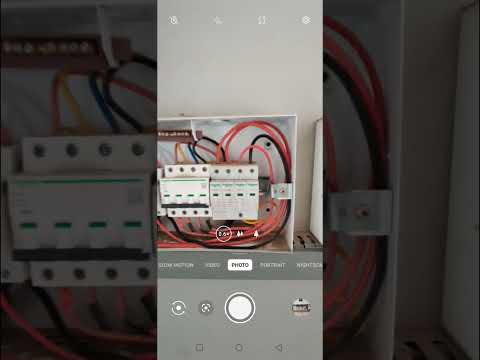
Plc control automatic control db penalSolar System Maintenance & Troubleshooting Guide (2026 Edition)
Investing in solar panels is a 25-year commitment, but without proper maintenance, your energy production can drop by as much as 30% in just two years. In 2026, as grid prices in the US continue to climb, keeping your system at peak performance is the best way to protect your investment.
Here is a professional guide to maintaining and troubleshooting your home solar system.
1. The Cost of Maintenance in 2026
In the USA, professional solar maintenance typically costs between $390 and $720 per year
- Cleaning:
- Costs around $150–$350 depending on the number of panels.
- Annual Inspection:
- Usually ranges from $150 to $300 to check wiring and inverter health.
- Pro Tip: While DIY cleaning can save you $200, hiring a pro ensures that micro-cracks or loose wiring are caught before they become fire hazards.
2. Common Solar Issues & How to Fix Them
- Unexpectedly High Bills: If your bill spikes, check your monitoring app for a "Low Production" alert. This is often caused by dust, shading from new tree growth, or a tripped breaker.
- Faulty Wiring: In 2026, "critter damage" (squirrels or rats chewing wires) is a leading cause of system failure. If you smell burning or see frayed wires, shut down the system immediately.
- Micro-cracks: Often invisible to the naked eye, these can be caused by heavy hail or thermal stress. A professional thermal imaging scan can detect these.
3. Understanding Inverter Error Codes (2026 Guide)
Most modern inverters (like Growatt, Tesla, or Enphase) use standard fault codes. Here are the most common ones:
- **Fault 04 (Low Battery Voltage): Usually means your battery is over-discharged. Reduce your load and let it charge from the grid or sun.
- **Fault 07 (Overload): You are running too many appliances at once. Turn off heavy loads like the dryer or AC and reset the inverter.
4. The "Universal Reset" Trick
Before calling a technician for a "glitched" screen or frozen monitoring app, try this:
- Turn OFF the Solar Breaker (PV Input)
- Turn OFF the Battery Breake
- Turn OFF the Main Grid Input.
- Wait for 5 minutes until the screen is blank.
Conclusion: Stay Ahead of the Curve
Don't wait for your system to stop working. A simple visual inspection every 3 months and a professional check-up once a year will ensure your solar panels last well beyond their 25-year warranty.
USA Solar Tax Credits 2026: What Homeowners Need to Know
The year 2026 marks a major shift in the US solar landscape. While the famous 30% federal tax credit was the backbone of solar growth for years, new legislation has changed the rules for homeowners and businesses alike.
1. The "Sunset" of the Residential Tax Credit (Section 25D)
The biggest update for 2026 is that the Residential Clean Energy Credit (Section 25D)—which allowed homeowners to claim 30% of their solar costs—expired on December 31, 2025.
- Current Status: For systems installed and "placed in service" starting January 1, 2026, homeowners can no longer claim this 30% credit directly on their personal tax returns.
- Impact: This makes the upfront cost of solar about 30% higher for those who buy their systems with cash or loans.
2. The Rise of Third-Party Ownership (Leases & PPAs)
Even though the personal credit has expired, commercial tax credits still exist. This has created a huge trend toward Solar Leases and Power Purchase Agreements (PPAs).
- How it works: Because the solar company owns the system, they can still claim the federal tax benefits. They often pass these savings to the homeowner in the form of lower monthly electricity rates.
- 2026 Strategy: For many US homeowners, leasing has become more financially attractive than buying in 2026.
3. Commercial Investment Tax Credit (ITC) 2026
For businesses and commercial properties, the Investment Tax Credit is still active but has specific deadlines:
- 30% Base Credit: Still available for projects that meet specific "Safe Harbor" requirements.
- Safe Harbor Deadline: To lock in the 30% rate, projects must generally be "in construction" by July 4, 2026.
- Bonus Credits: Businesses can get an extra 10% bonus if the project is in an "Energy Community" (areas previously dependent on coal or oil) or if they use "Domestic Content" (materials made in the USA).
4. State-Specific Incentives (The New Focus)
Since the federal credit for homeowners is gone, state-level programs are now the main way to save:
- Massachusetts (SMART Program): Provides 10 years of bill credits worth thousands of dollars.
- New Jersey (SuSI Program): Pays homeowners roughly $90 per MWh of solar energy produced for 15 years.
- California: Offers various rebates for low-income households and battery storage (SGIP).
- Property Tax Exemptions: Many states like Florida and Texas still ensure that adding solar won't increase your property taxes.
- Must be install any types storage setup
- Thank you from Sameer Ali electric and solar specialist three phase


No comments:
Post a Comment